Get Our Email Letter
Subscribe to the Nhu Design mailing list to receive updates on new arrivals, special offers and other discount information.
.png)
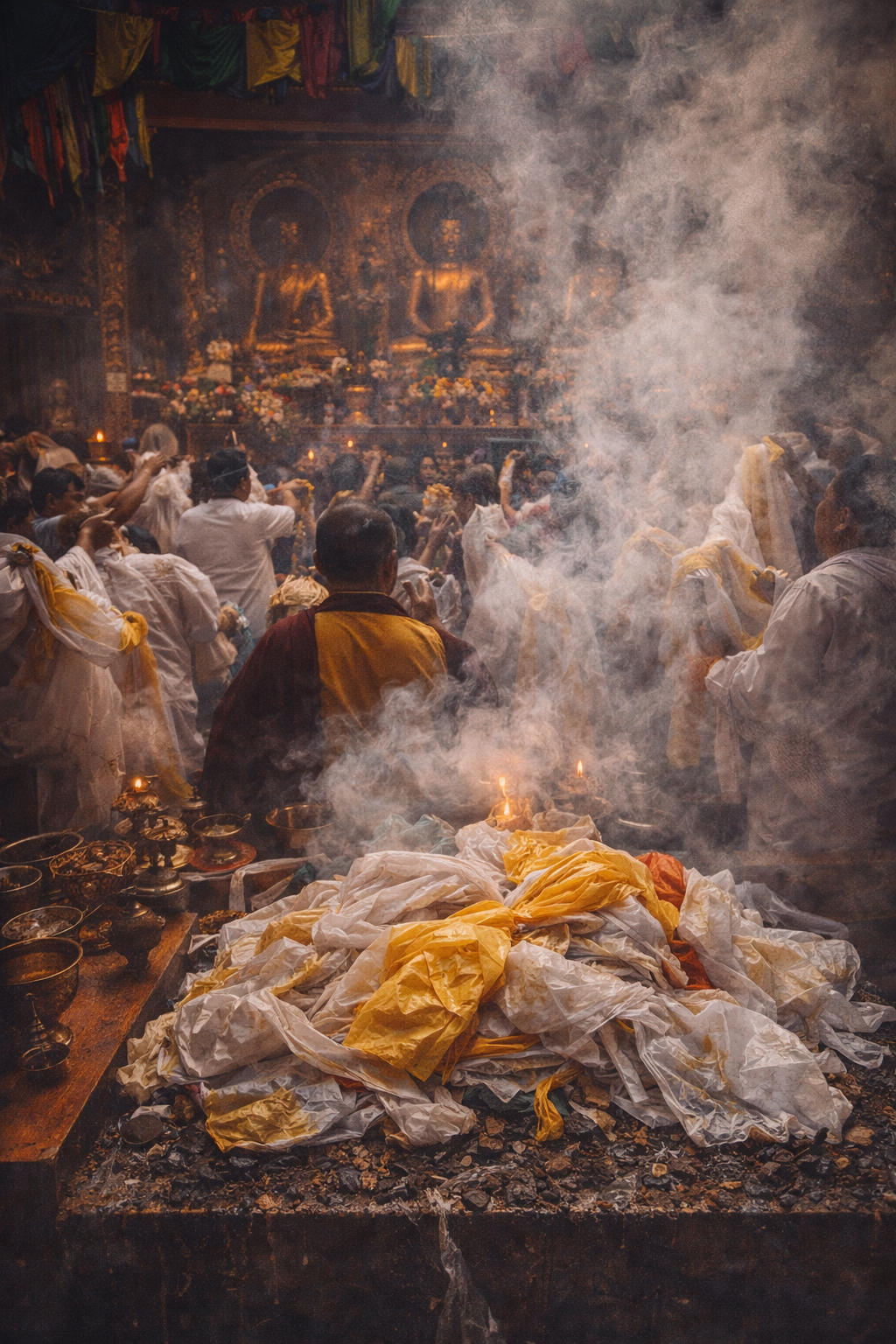
Walk into any Nepali home after a wedding, religious ceremony, political event, graduation, or cultural gathering, and you will likely find a pile of khadas tucked away in a drawer, hanging in a cupboard, or forgotten in a storage box.
Beautiful. Sacred. Full of memories.
Yet, eventually, many of these khadas meet an unfortunate fate.
Some are discarded during house cleaning. Some end up mixed with household waste. Others are thrown into rivers during religious practices. What was once offered as a symbol of respect, gratitude, and blessing has slowly become part of Nepal's growing textile waste problem.
At Nhu Designs, we looked at these forgotten fabrics and asked a simple question:
What if a blessing never had to become waste?
A Fabric That Carries Meaning
The khada is much more than a piece of cloth.
For generations, it has represented goodwill, purity, compassion, and respect. It is offered to guests, teachers, elders, newlyweds, spiritual leaders, and loved ones. It accompanies some of the most meaningful moments of our lives.
But unlike many traditional textiles that are continuously used, khadas are often received in large numbers. A single individual may collect dozens over the years.
The challenge is not the khada itself.
The challenge is what happens after the ceremony ends.
Many people do not know how to reuse them. Some keep them for years. Others eventually dispose of them.
When multiplied across thousands of events happening every year throughout Nepal, the volume becomes significant.
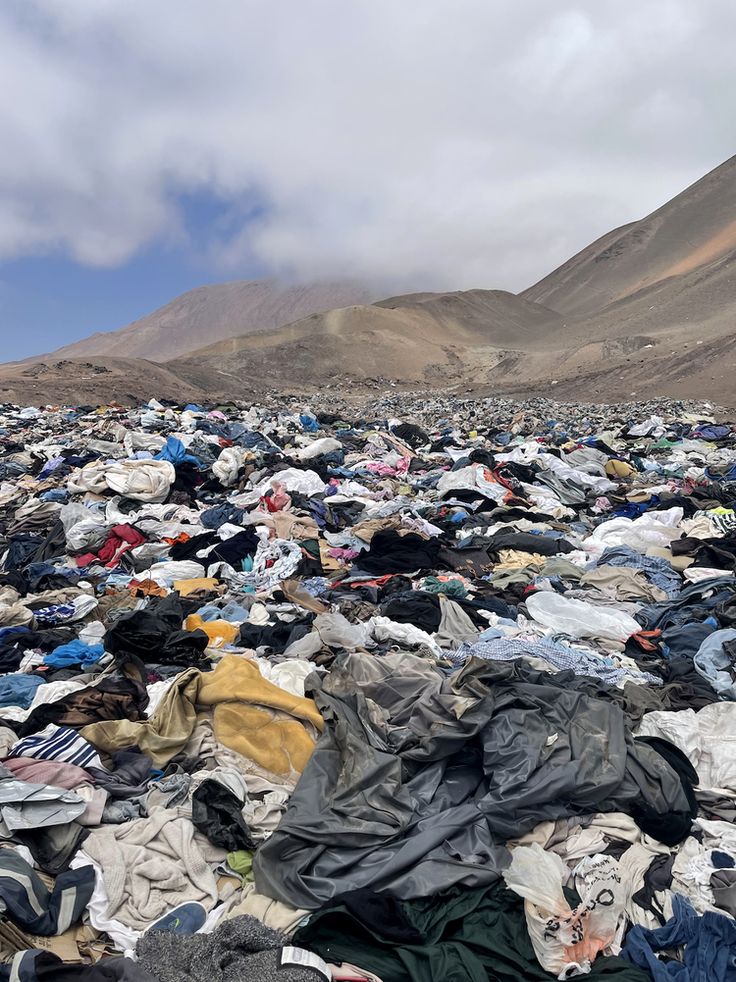
Textile waste is one of the fastest-growing waste streams globally. Every year, an estimated 92 million tonnes of textile waste are generated worldwide, with a truckload of clothing effectively discarded every second.
Nepal is not immune to this problem.
Recent investigations have found increasing amounts of textile waste in rivers such as the Bagmati and Dhobi Khola. Researchers have documented discarded clothing, synthetic fabrics, and household textiles accumulating along riverbanks and entering landfills. Nepal's waste management systems are already under pressure from growing consumption and fast fashion imports.
The issue extends beyond consumer clothing.
Ceremonial textiles, event materials, hotel linens, and fabric leftovers also contribute to the growing challenge of textile disposal.
While a single khada may seem insignificant, thousands of discarded khadas collectively represent a valuable resource being lost.
A few years ago, while working on textile waste reduction initiatives, we noticed something interesting.
People did not want to throw away their khadas because they held emotional and cultural value.
At the same time, they often had no practical use for them.
This created an opportunity.
Instead of treating old khadas as waste, what if they could be transformed into products that people would continue to use every day?
That idea became the foundation of one of Nhu Designs' most meaningful upcycling projects.
Every upcycled khada product begins with collection.
Some khadas come through community donations. Others arrive through awareness campaigns, events, and partnerships with individuals who want their ceremonial textiles to have a second life.
The process is simple but thoughtful.
First, the khadas are sorted, cleaned, and inspected.
Then comes the creative part.
Colors are matched. Textures are combined. Patterns are reimagined.
What was once a ceremonial scarf begins a new journey as:
1. Tea Coasters
2. Table mats
4. Storage Baskets
5. Decorative home accessories
6. Sustinable home accessories
7. Sustainable gift items
6. Corporate merchandises
Each product carries traces of its original story while gaining a completely new purpose.
No two pieces are exactly alike.
Many people think sustainability is about replacing tradition.
We believe the opposite.
Some of the most sustainable solutions are rooted in traditional values.
Nepali culture has always embraced repair, reuse, sharing, and resourcefulness. Previous generations repaired clothes, reused containers, and extended the life of everyday items long before sustainability became a global conversation.
Upcycling khadas is not about changing culture.It is about bringing traditional wisdom into modern life.By transforming unused khadas into functional products, we honor both the cultural meaning of the fabric and the environmental responsibility of reducing waste.
At Nhu Designs, every khada that is upcycled represents more than a product sold.
It represents:
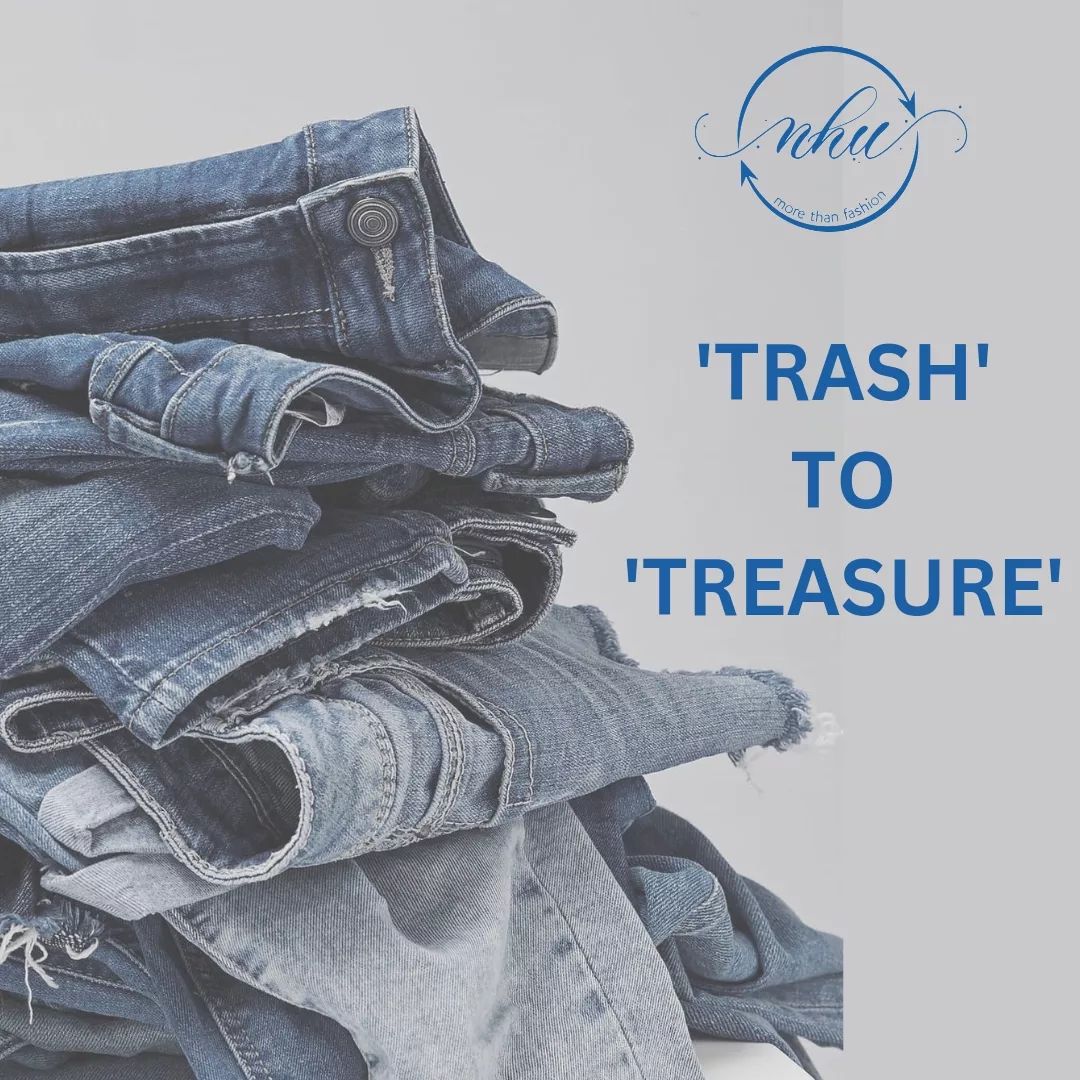
Since our inception, Nhu has upcycled hundreds of discarded khadas alongside denim waste, deadstock fabrics, and industrial textile scraps, preventing valuable materials from being discarded prematurely.
The numbers matter.
But the mindset shift matters even more.
Because every time someone sees an upcycled khada coaster or basket and says, "I never knew this could be made from a khada," a new conversation begins.
1. Imagine if every orgnization, monastery, event venue, wedding planner, and household had a way to responsibly resue ceremonial textiles.
2. Imagine if every khada carried not just one story,but many.
3. Imagine if blessing given today could continue creating value for years to come. That is the future we are working toward.
4. A future culture heritage and environmental responsibility go handin hand.
5. A future where waste is viewed not as an endpoint, but as the beginning of a new possibility.
Because sometimes the most meaningful transformations do not happen in factories. They happen when we learn to see value where others see waste. And for us, that journey with a simple khada.







Typi non habent claritatem insitam, est usus legentis in iis qui facit eorum claritatem. Investigationes demonstraverunt lectores legere me lius quod ii legunt saepius. Claritas est etiam processus A Capitalize on low hanging fruit to identify a ballpark value added activity to beta test. Override the digital...ditional clickthroughs from DevOps. Nanotechnology immersion along the information highway will close the […]
Subscribe to the Nhu Design mailing list to receive updates on new arrivals, special offers and other discount information.